


0800 815 815
24-hour emergency call throughout Switzerland
Damage report
Online: quick & easy →
Insulation drying:
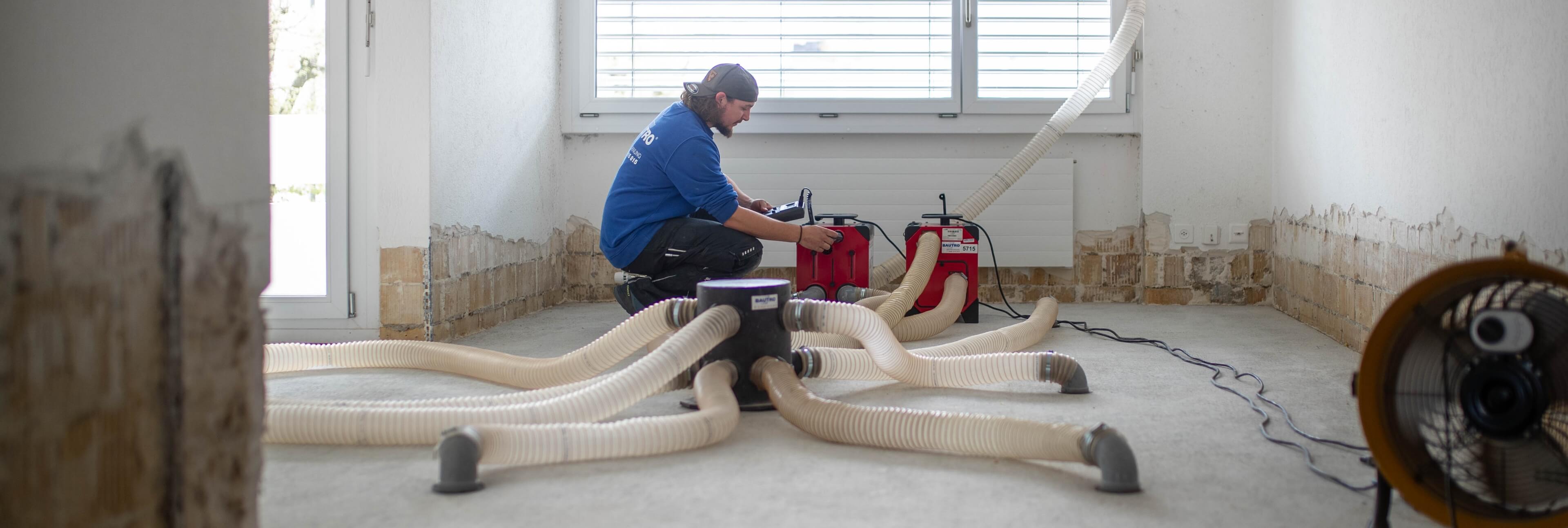
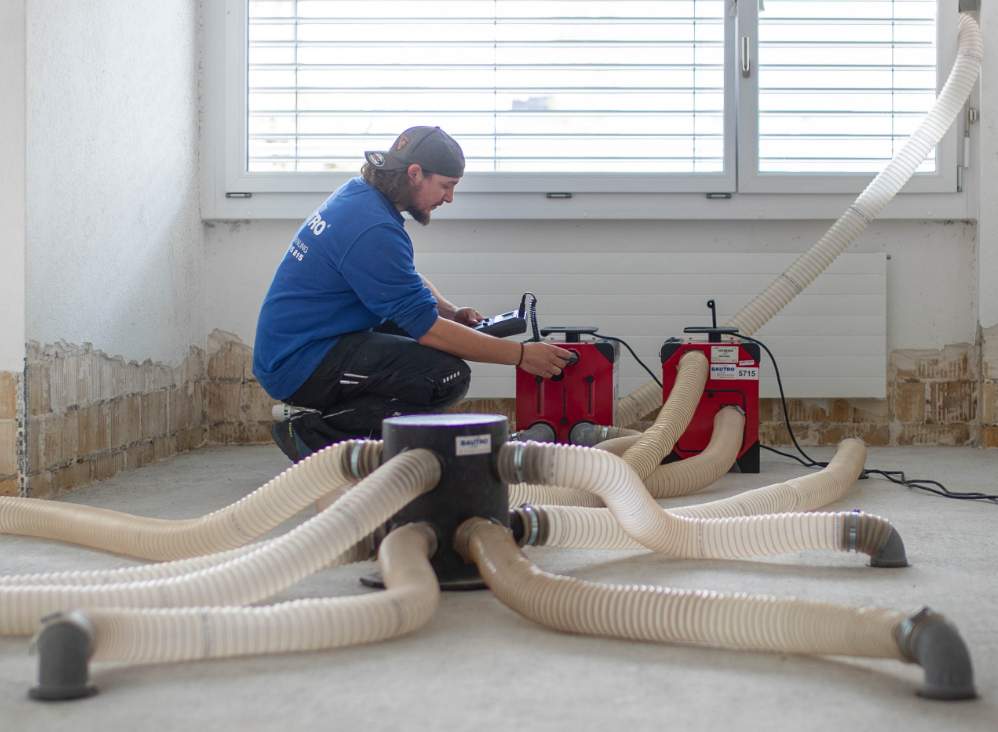
Drying existing insulation and building components using the overpressure method, negative pressure method or push-pull method saves time-consuming and cost-intensive replacement of existing elements such as soaked insulation in underlay floors, double-skin masonry or flat roofs.
Make an appointment for insulation drying now
We operate throughout Switzerland and are there for you 24/7
Insulation drying underlay floor
Overpressure method:
Blowing in dry air through drill holes and joint nozzles.
Vacuum method:
Extraction of standing water and moist air through drill holes using a vacuum.
Push-pull method:
Positive pressure method and negative pressure method combined.
These are efficient methods for drying soaked underlayment and insulation.
Drying wall constructions
Blowing dry air through drilled holes in wall constructions such as double-shell masonry and stud constructions with or without insulation. This is the most efficient method for drying soaked wall constructions. Simple masonry is dried using air cushions or infrared heaters.
Drying wooden structures
Drying by blowing dry air through openings, drill holes and joint nozzles is an effective method of drying insulated and non-insulated wooden structures.
Drying flat roofs
In order for drying to be carried out, nozzles must first be installed by the flat roof specialist.
Blowing in dry air (positive pressure method) or extracting standing water and moist air using a vacuum (negative pressure method) or a combination of both (push-pull method) are the most efficient methods for drying a flat roof.
Cavity drying bathtub/shower/riser zone
Blowing dry air into the cavities through openings or drill holes is the most efficient method for drying the wet components under the bathtub and shower tray.
You might also be interested in
Water damage
restoration
restoration
Moisture measurement, leak detection and advice
Building drying
New buildings and conversions
New buildings and conversions
Water damage
detection
detection
